Shalakya Tantra is one of the eight classical branches of Ayurveda. It traditionally concerns the prevention and management of disorders of the eyes, ears, nose, throat, oral cavity, teeth, head and neck.
The Shalakya Tantra Department follows a comprehensive approach to healthcare, combining classical Ayurvedic principles, detailed clinical assessment, appropriate therapeutic procedures and individualised patient care. The department focuses on promoting eye health, ear-nose-throat wellness, oral hygiene and the appropriate management of selected head and neck conditions through safe, patient-centred care.
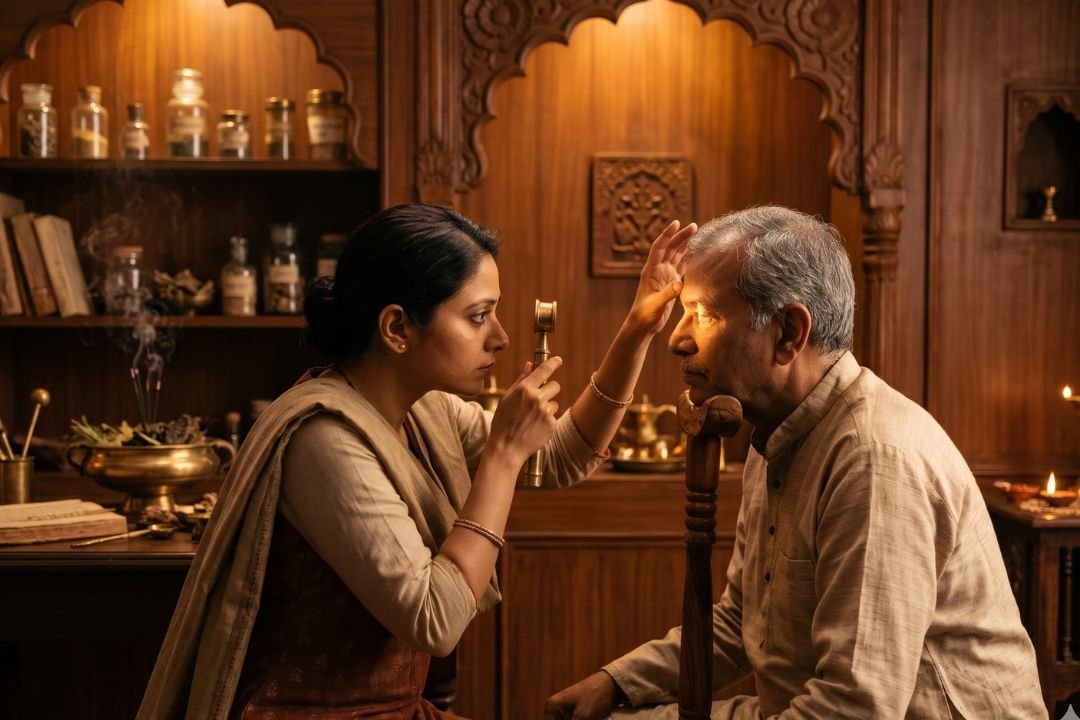
Netra Roga Chikitsa refers to the Ayurvedic assessment and management of selected eye-related complaints. Treatment is planned according to the presenting symptoms, examination findings and individual health requirements. Eye conditions may require specialised ophthalmological examination before any local Ayurvedic procedure is considered.
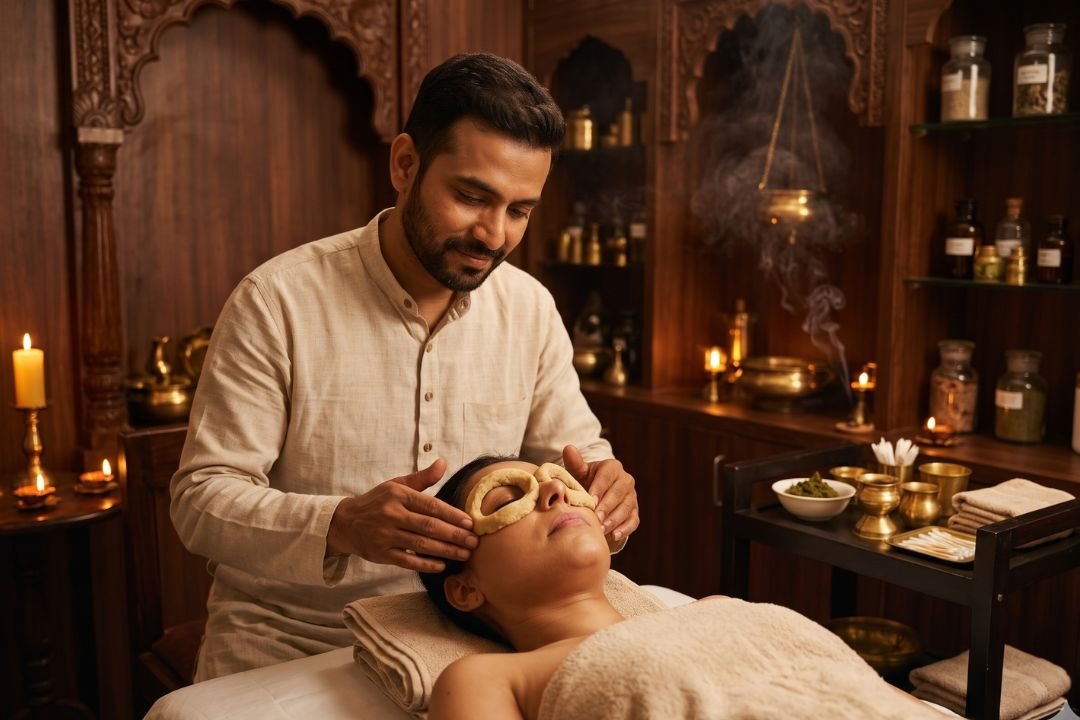
Netra Tarpana is a traditional Ayurvedic procedure in which a prescribed preparation, classically ghee-based, is retained around the eyes within a specially prepared boundary for a specified duration. It is described in classical Ayurvedic practice as a specialised eye-care procedure. Its suitability must be assessed carefully, and it should not be assumed to treat every eye disorder.
Aschyotana is a classical Ayurvedic procedure involving the application of prescribed drops to the eye according to a specific traditional protocol.
Anjana Karma is a traditional Ayurvedic procedure involving the application of a specifically prescribed preparation to the designated ocular region according to classical protocols.
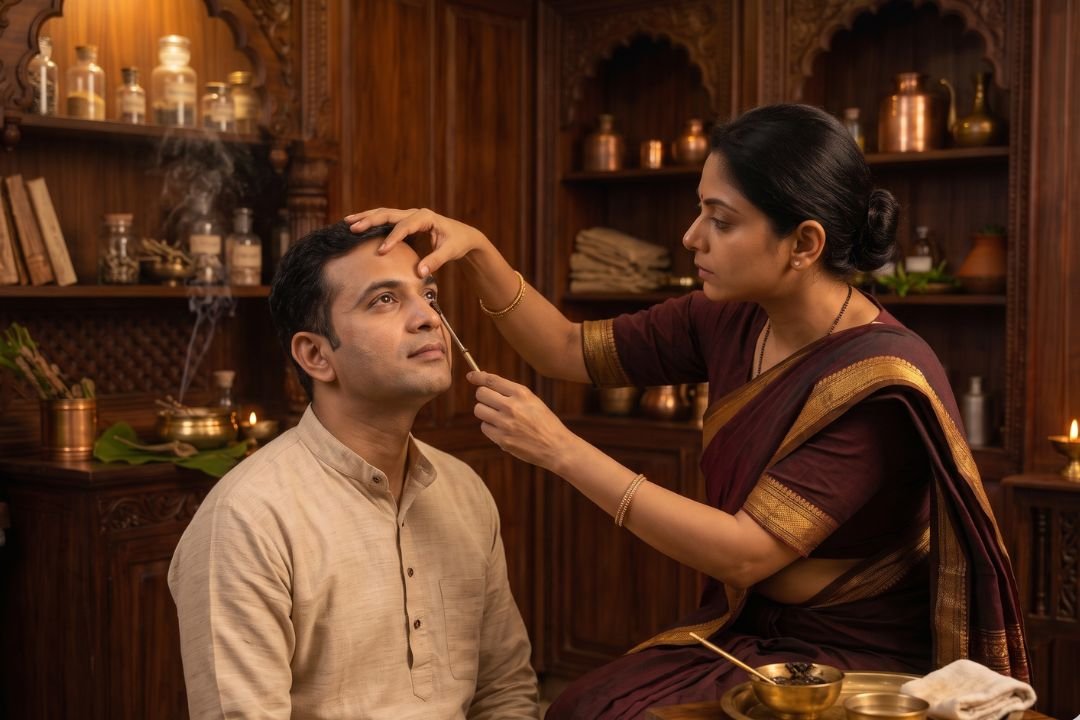
Karna Roga Chikitsa refers to the assessment and management of selected ear-related complaints within the Ayurvedic clinical framework. The treatment approach depends on symptoms such as discomfort, dryness, blocked-ear sensation or other ear complaints, along with appropriate examination findings.
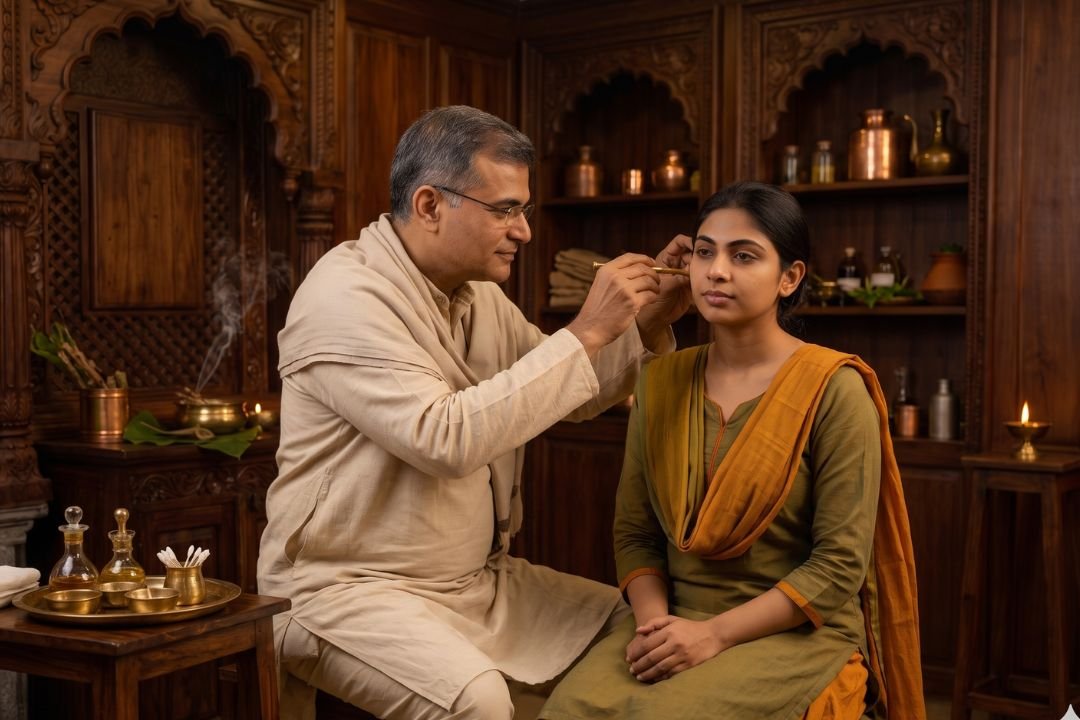
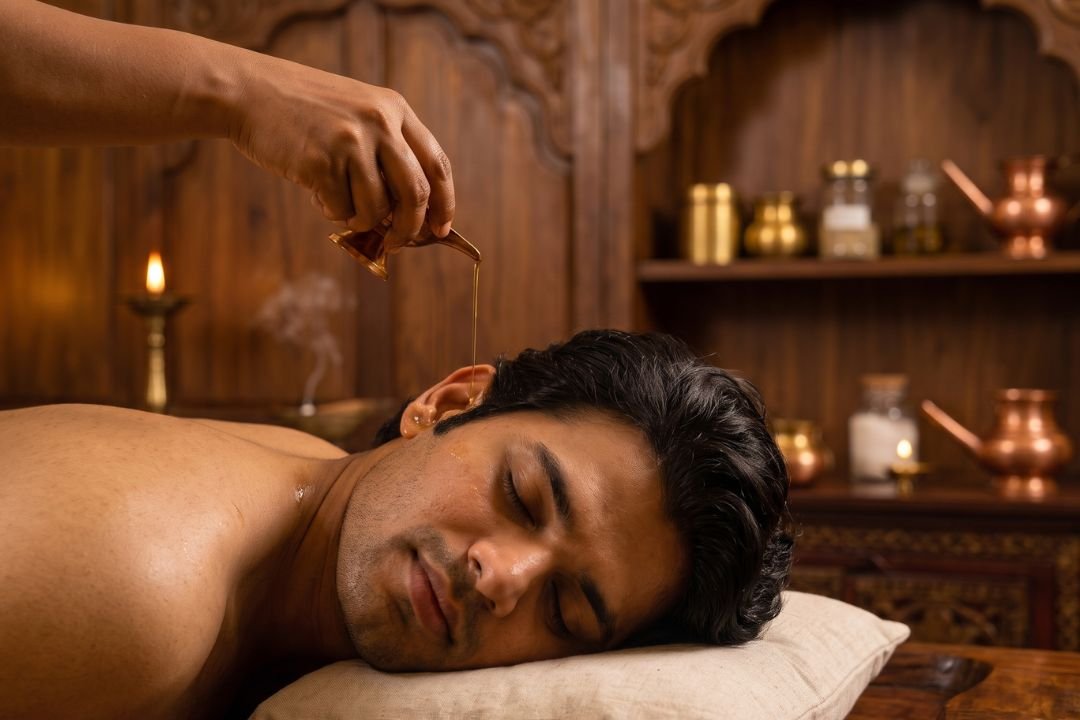
Karnapoorana is a traditional Ayurvedic procedure involving the application or retention of an appropriately prescribed liquid, commonly medicated oil, in the external ear under specific conditions.
Nasya Karma is a traditional Ayurvedic procedure involving the administration of specifically prescribed preparations through the nasal route. The type of preparation, dose and method depend on the patient’s condition, age, clinical assessment and suitability for the procedure.
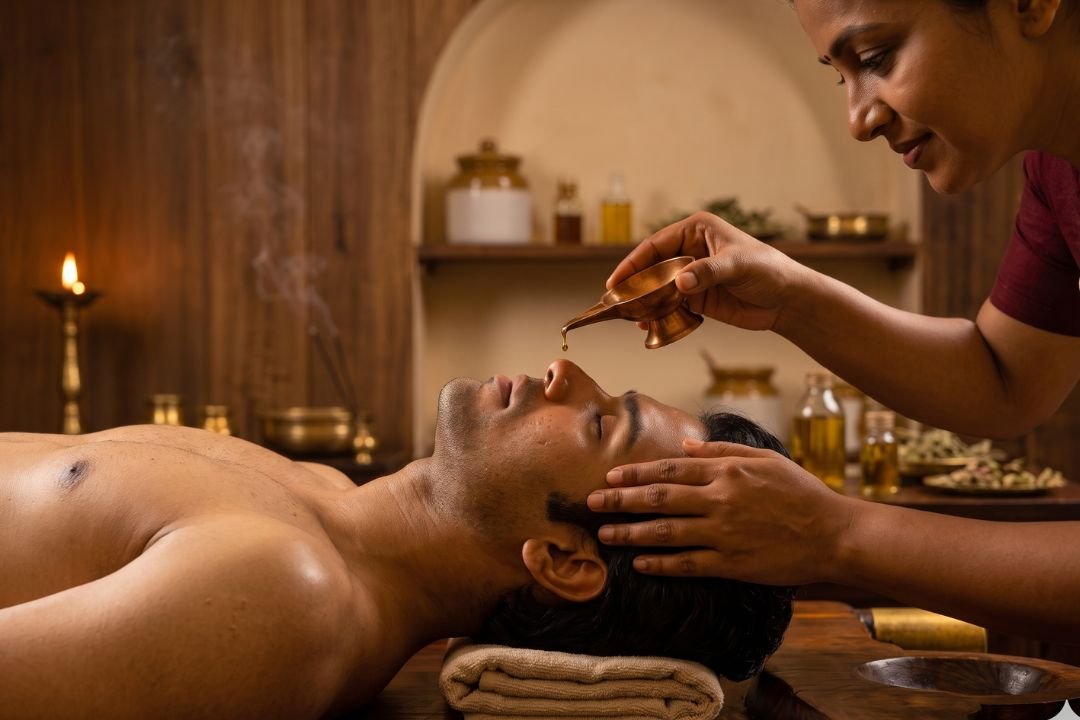
Pratimarsha Nasya is a traditional Ayurvedic nasal practice described as a comparatively mild form of Nasya involving a small quantity of an appropriately selected preparation.
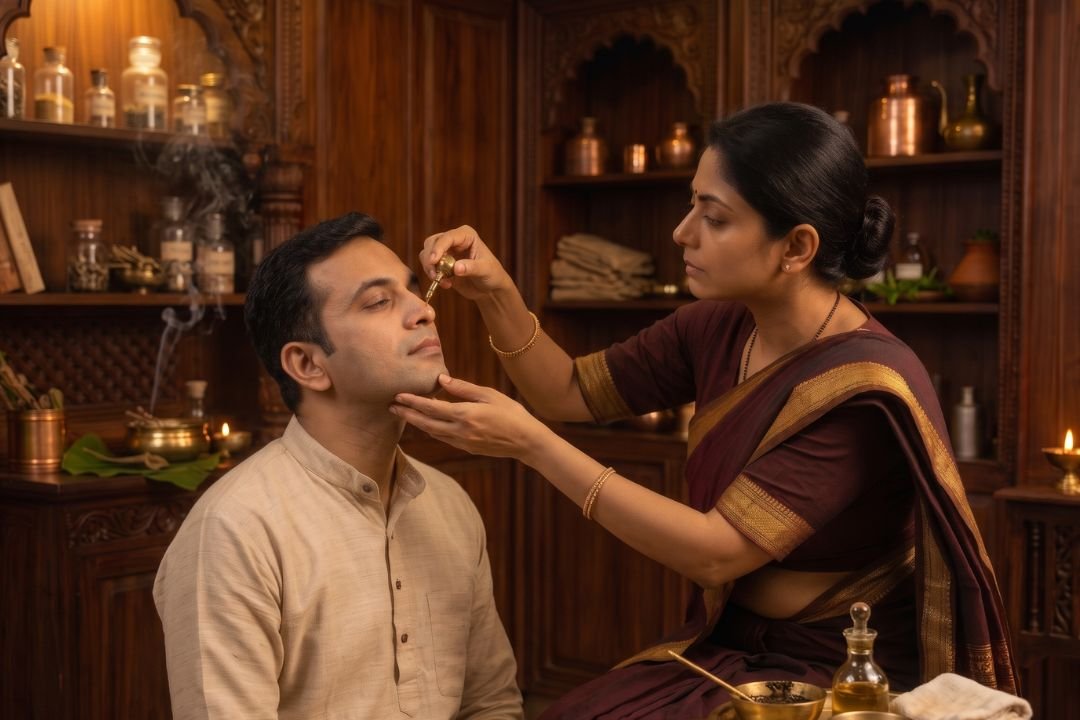
Pradhamana Nasya is a specialised traditional Ayurvedic nasal procedure involving the administration of a prescribed powder preparation through the nasal route.
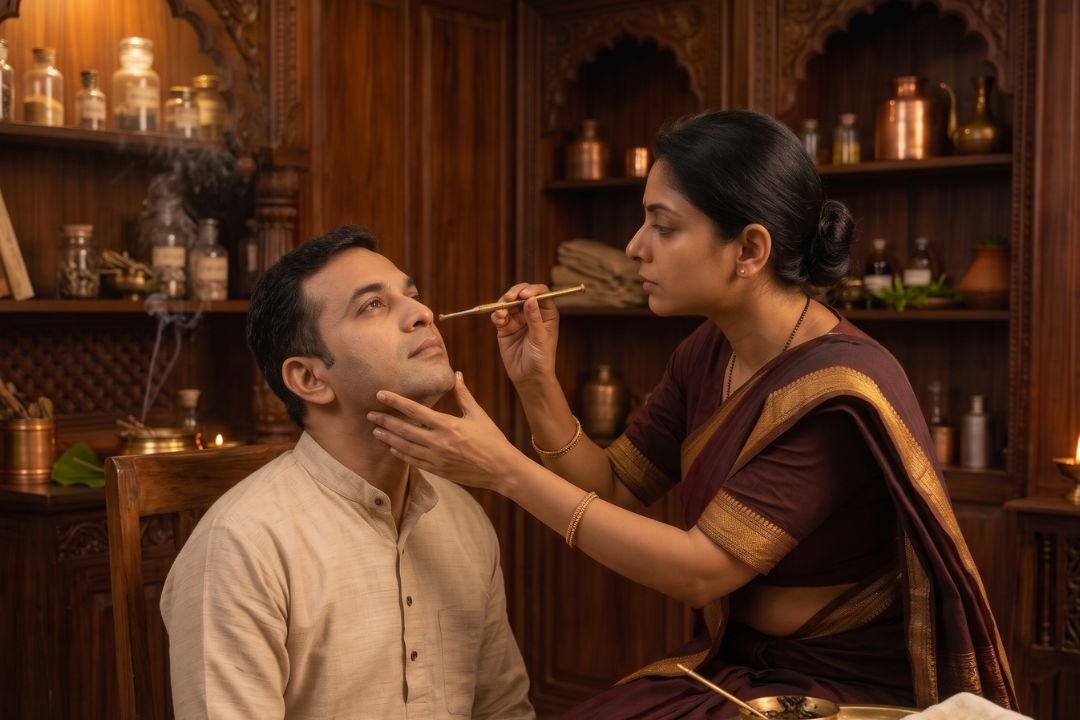
Nasa Roga Chikitsa concerns the Ayurvedic assessment and management of selected disorders affecting the nose and nasal passages.
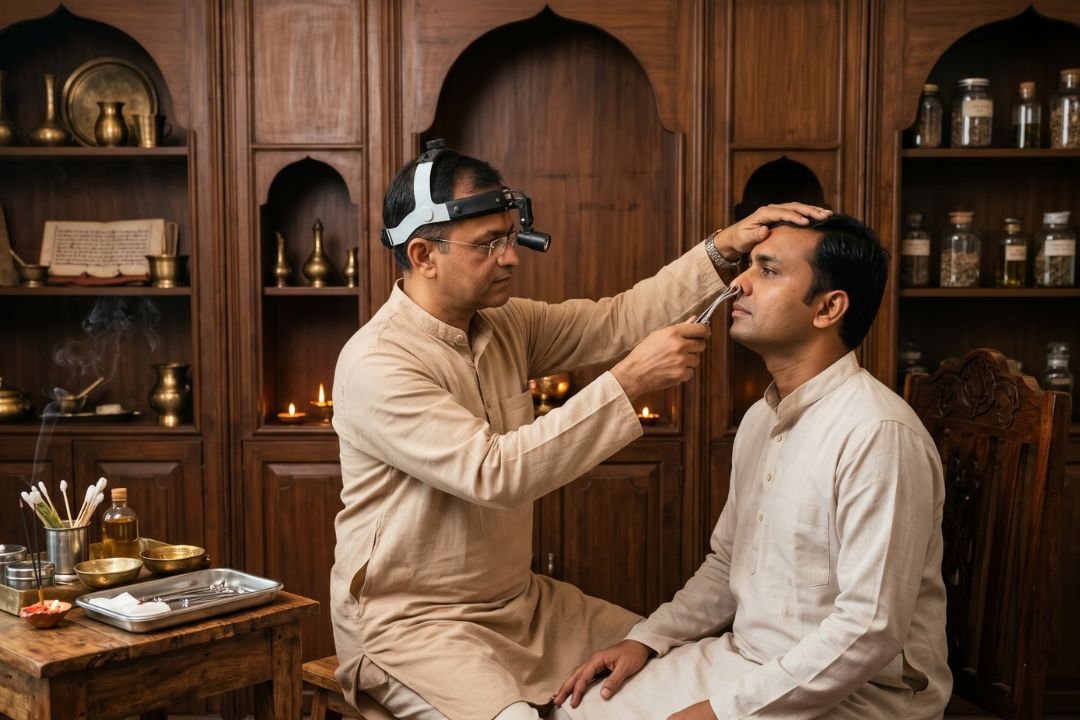
Mukha Roga Chikitsa refers to the Ayurvedic assessment and management of selected conditions affecting the oral cavity, gums, tongue and surrounding tissues. The department may provide oral hygiene guidance and appropriate supportive care, with referral to a dental professional when necessary.
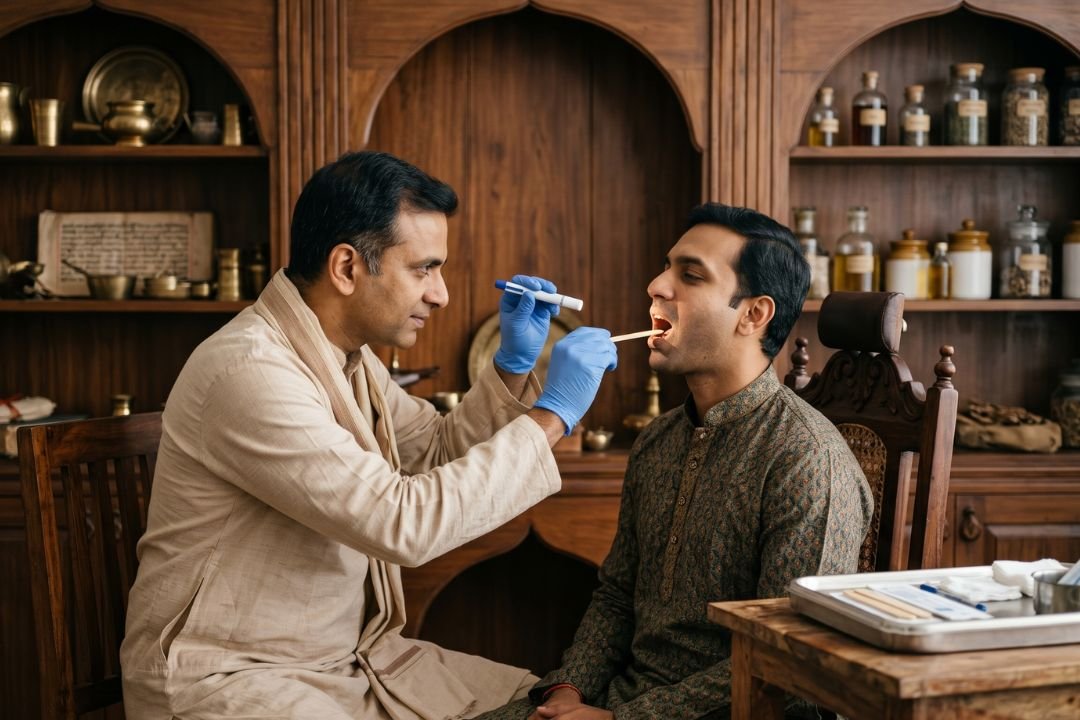
Dant Roga Chikitsa concerns the traditional Ayurvedic approach to selected dental complaints and preventive oral care. Management should be based on appropriate dental assessment, especially when pain, decay, infection or structural damage is suspected.
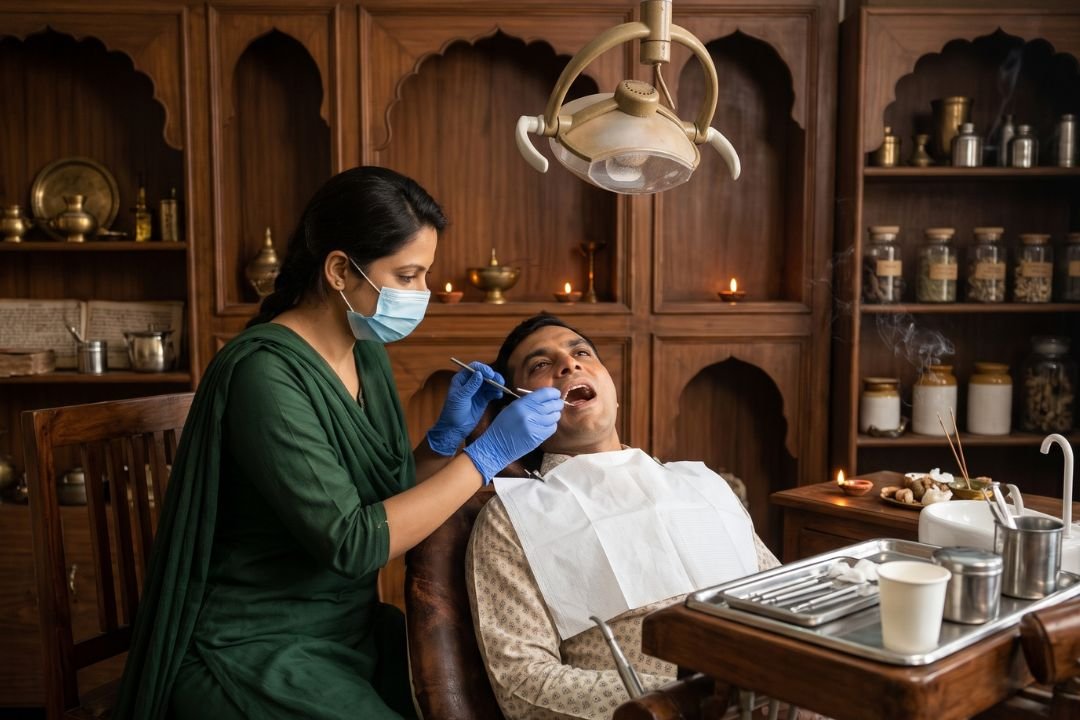
Gandusha is a traditional Ayurvedic oral-care procedure in which a prescribed liquid is held in the mouth for a specified period without active swishing, according to the traditional technique.
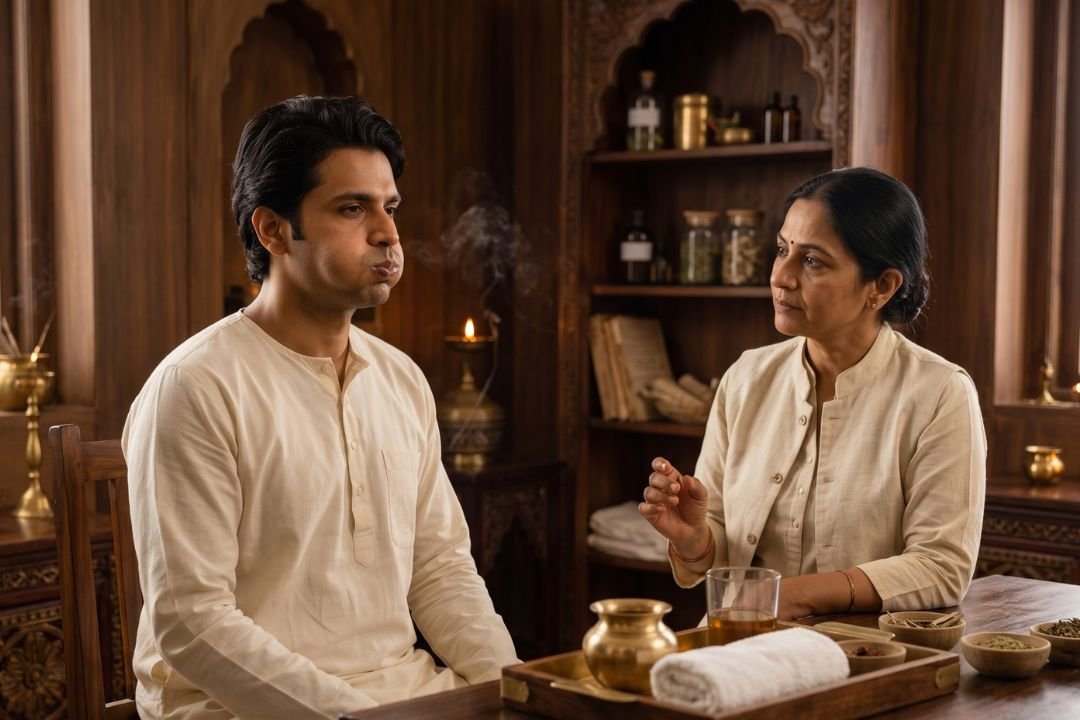
Kavala is a traditional Ayurvedic procedure involving the movement or rinsing of an appropriately selected liquid within the mouth.
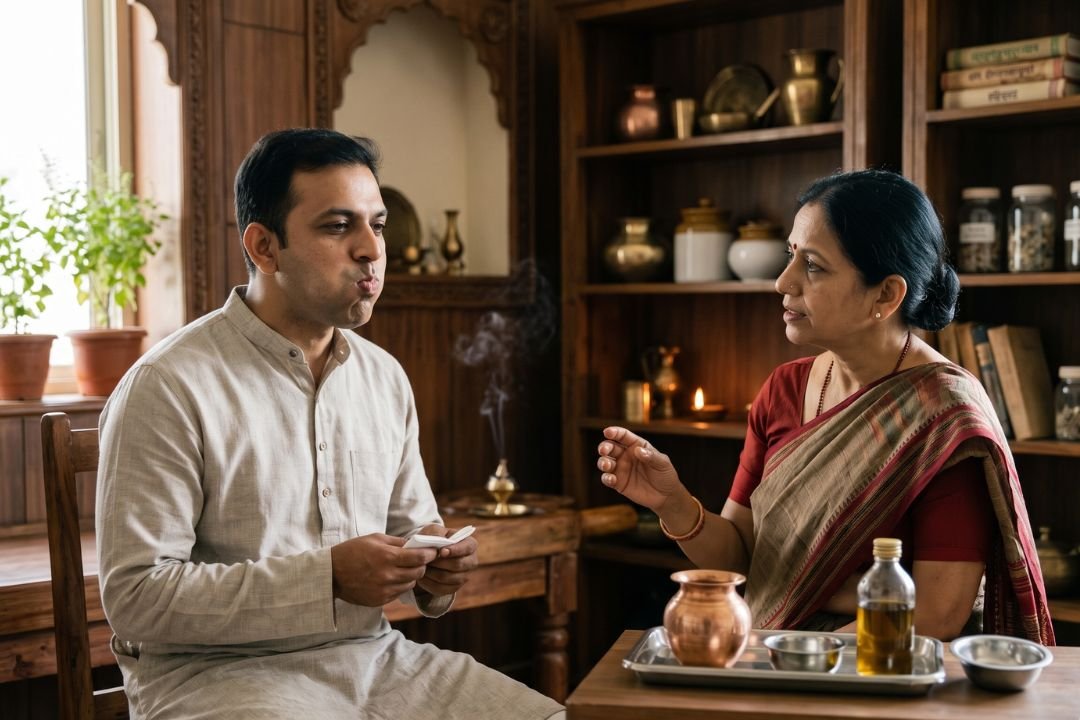
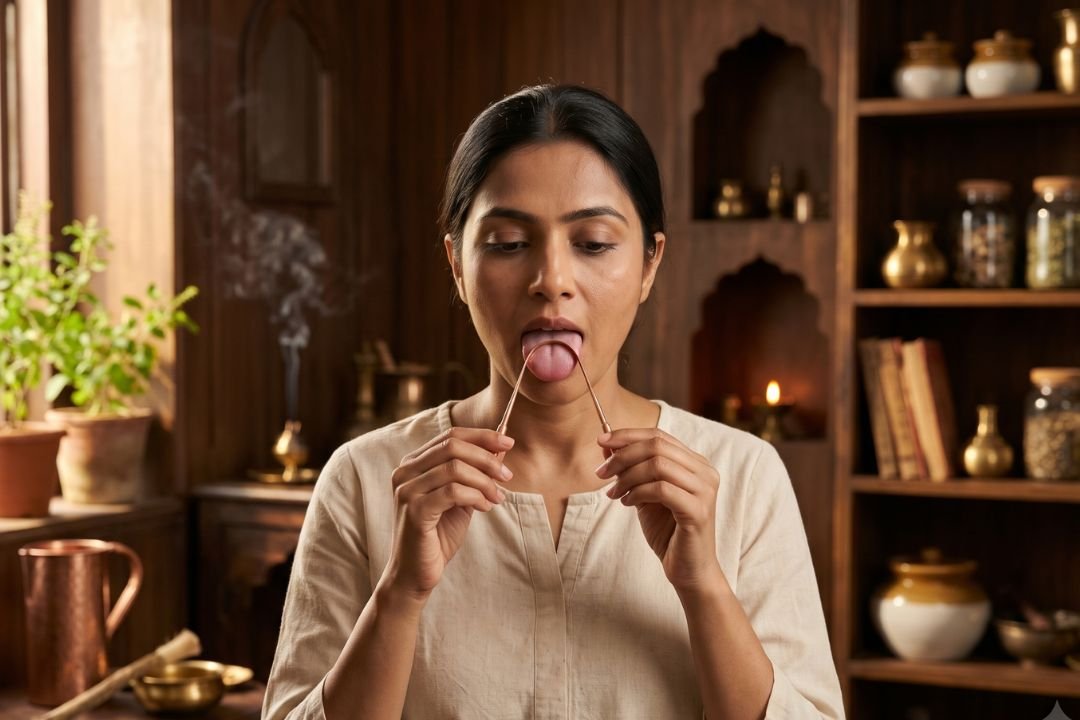
Jihwa Nirlekhana refers to tongue cleaning as part of traditional oral hygiene and daily self-care.
Shiro Roga Chikitsa refers to the Ayurvedic assessment of selected conditions involving the head and related structures. Symptoms such as headache, head heaviness or discomfort may have different causes and require appropriate evaluation before treatment is selected.
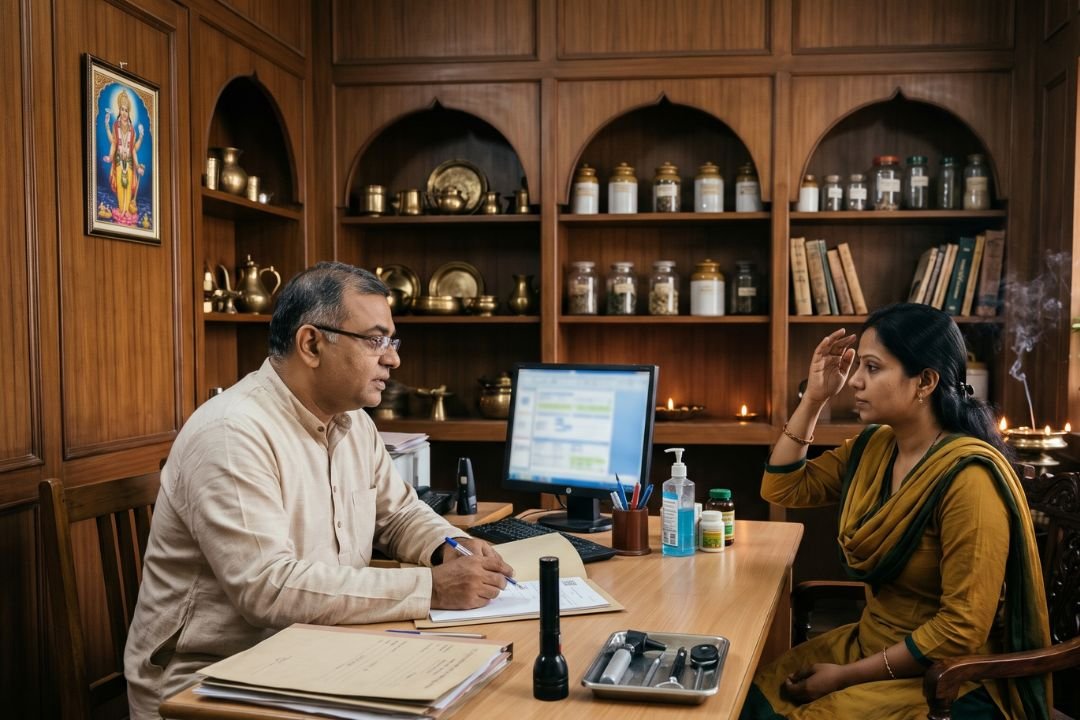
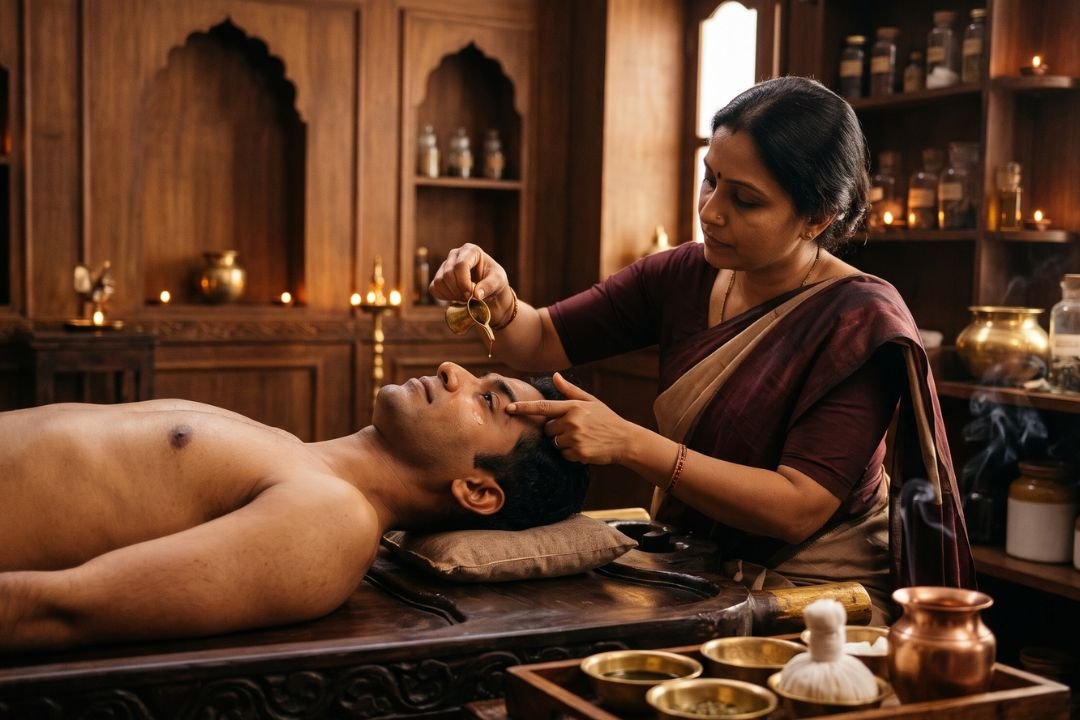
Shirodhara is a traditional Ayurvedic procedure in which a prescribed liquid, commonly medicated oil, is poured in a controlled stream over the forehead for a specified duration.
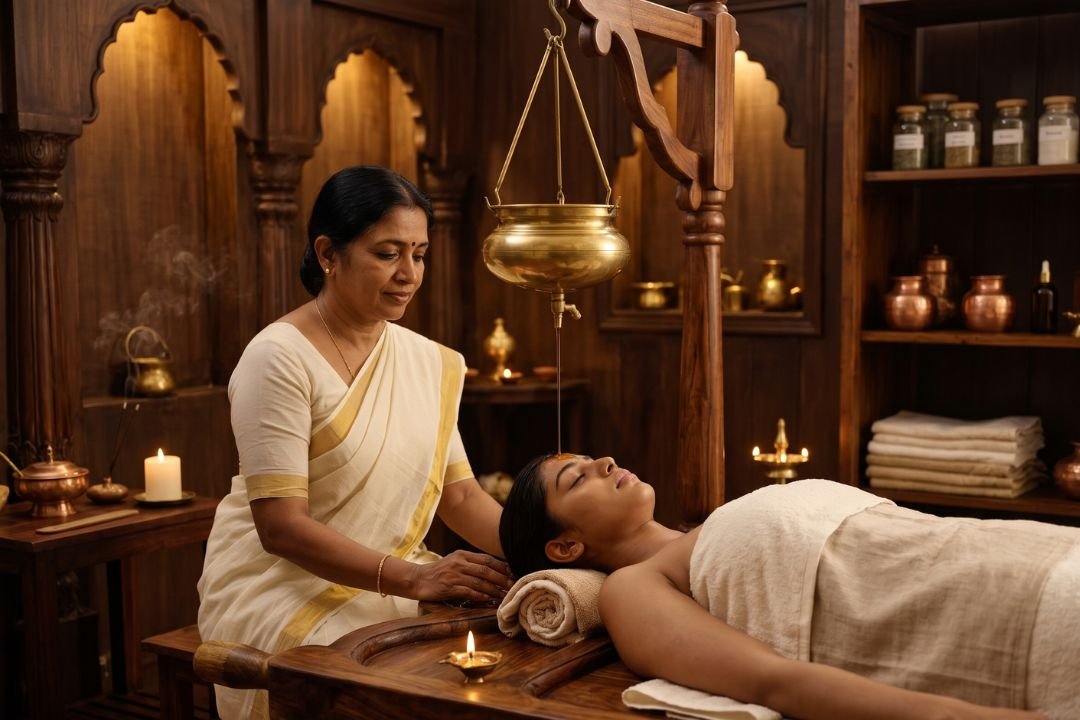
Murdha Taila refers to traditional Ayurvedic procedures involving the application of suitable oil to the head or scalp. Classical descriptions include Shiro Abhyanga, Shiro Seka, Shiro Pichu and Shiro Basti.
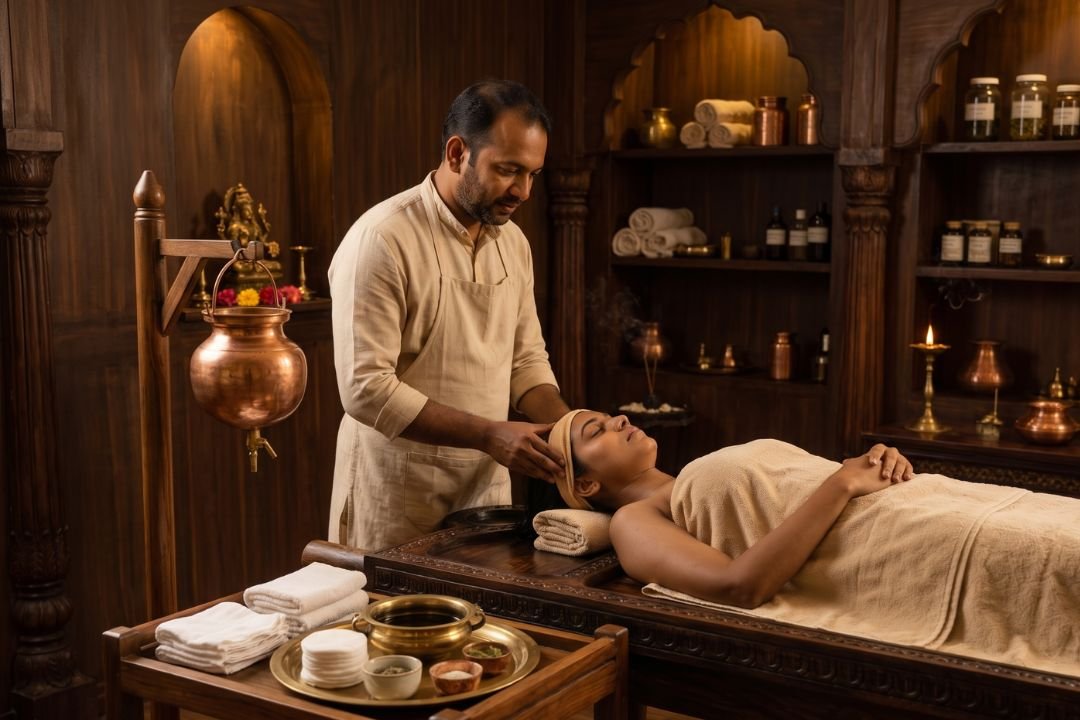
Shiro Abhyanga is a traditional head massage performed using an appropriately selected oil and a suitable massage technique.
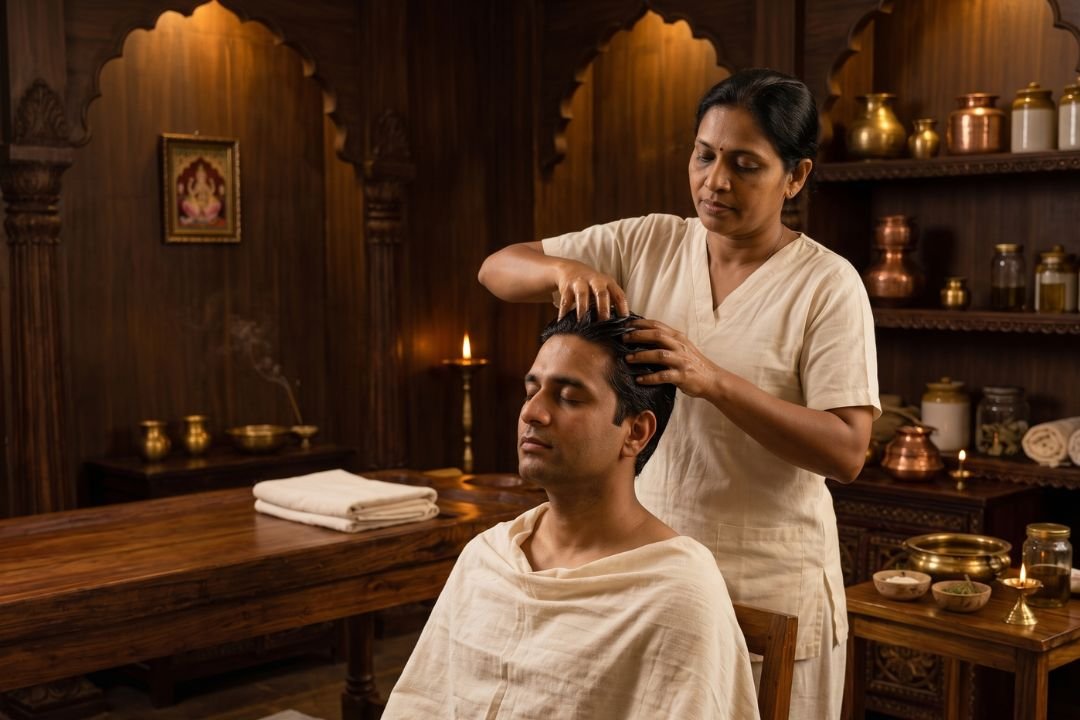
Preventive Shalakya care focuses on patient education, personal hygiene, early recognition of symptoms and appropriate referral for eye, ear, nose, throat and oral conditions.
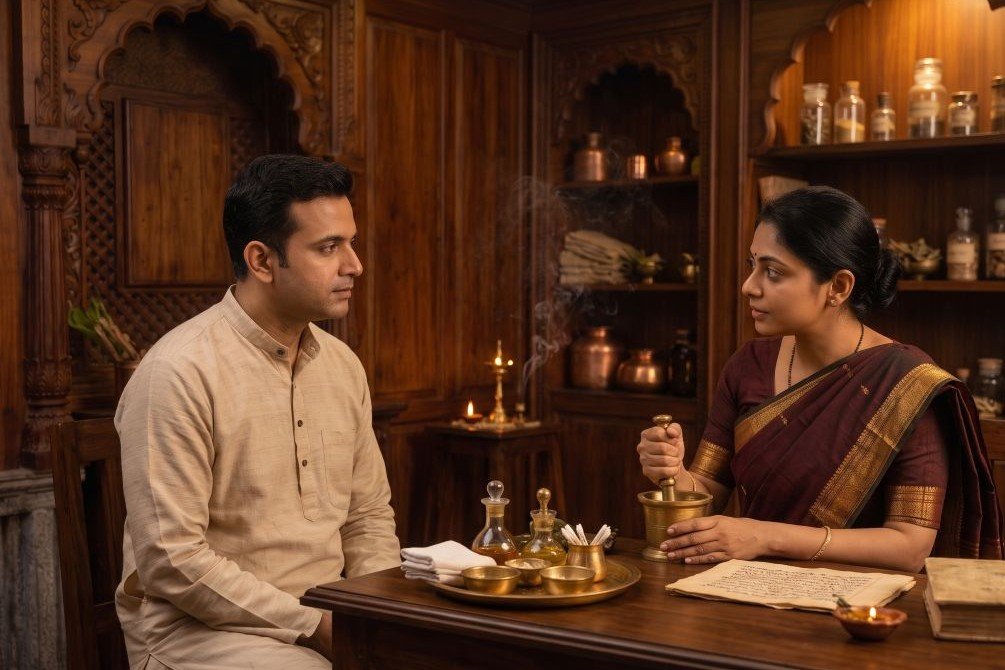
Based on appropriate clinical assessment, the department may provide consultation, selected Ayurvedic supportive care, preventive guidance or referral for conditions involving:
The suitability of Ayurvedic treatment depends on the diagnosis, symptom severity, medical history and individual requirements. Many eye, ear, nose, throat, dental and neurological conditions require evaluation by the relevant medical specialist.
The process begins with a detailed consultation and appropriate examination.
Based on the findings, the practitioner determines the appropriate course of care.
Where an Ayurvedic procedure is considered appropriate, the patient receives an explanation of the procedure, its purpose, limitations, potential risks and required preparation. Hygiene, contraindications and the suitability of the prescribed materials are reviewed.
The selected intervention is performed according to the patient’s clinical requirements and appropriate professional protocols. Procedures involving the eyes, ears, nose or other sensitive structures require particular attention to safety and clinical suitability.
After the procedure or consultation, the patient receives relevant guidance regarding:
Sudden loss or change of vision, severe eye pain, eye injury or chemical exposure, marked redness, painful light sensitivity
Ear pain, discharge, sudden hearing loss, dizziness, a suspected eardrum perforation or infection
Persistent obstruction, recurrent nosebleeds, high fever, severe facial swelling, symptoms affecting vision
Severe toothache, facial swelling, dental abscess, uncontrolled bleeding, difficulty swallowing
Sudden severe headache, new neurological symptoms, fever with neck stiffness, confusion, headache after a significant injury
Personalised Ayurvedic Care for Eye, Ear, Nose, Throat and Oral Health