Kaumarbhritya is Ayurvedic paediatrics, the branch of Ayurveda devoted to the health, growth and wellbeing of infants and children. Our department offers gentle, age-appropriate therapies, including therapeutic oil massage, Shirodhara, Shiropichu, Pinda Sweda, Nadi Sweda, Matra Basti and Nasya.
These therapies are used selectively and are modified for each child’s age and condition. Many serve as supportive care and are chosen by an Ayurvedic physician after assessing the child.
Each therapy below is a traditional Ayurvedic practice adapted for children. Your child’s physician decides which therapy, if any, is suitable.
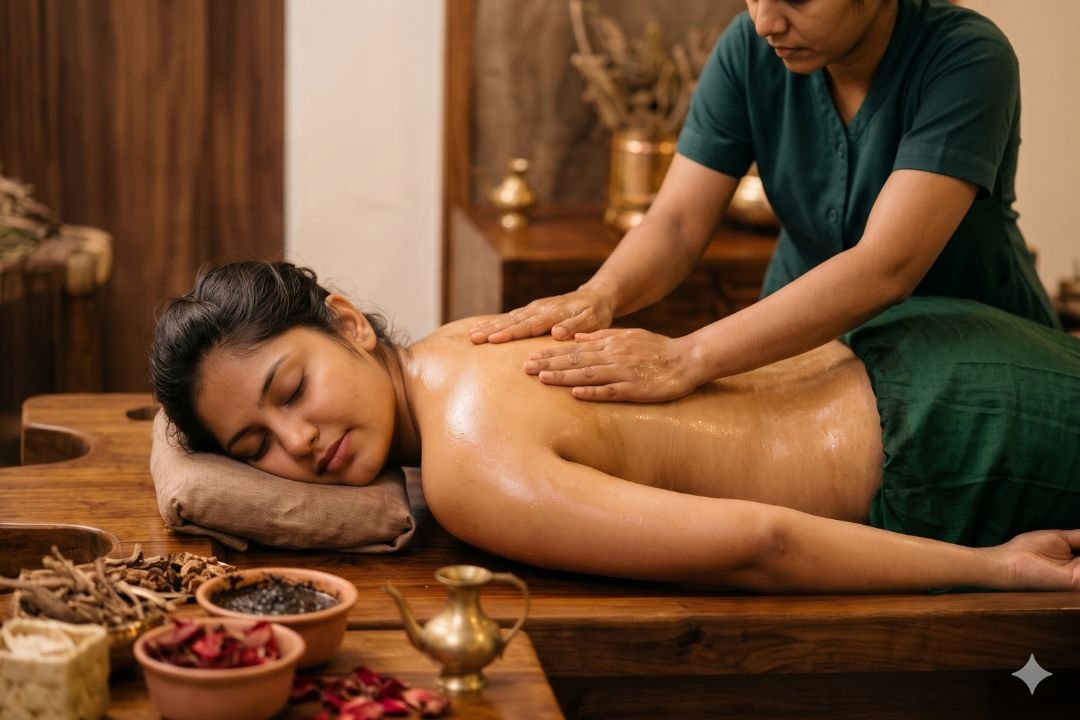
Abhyanga is the therapeutic application of medicated or suitable oil over the body or a prescribed body part, with gentle massage. In Kaumarbhritya, it is an important part of child care (Bala Paricharya) and is especially emphasised for infants and children.
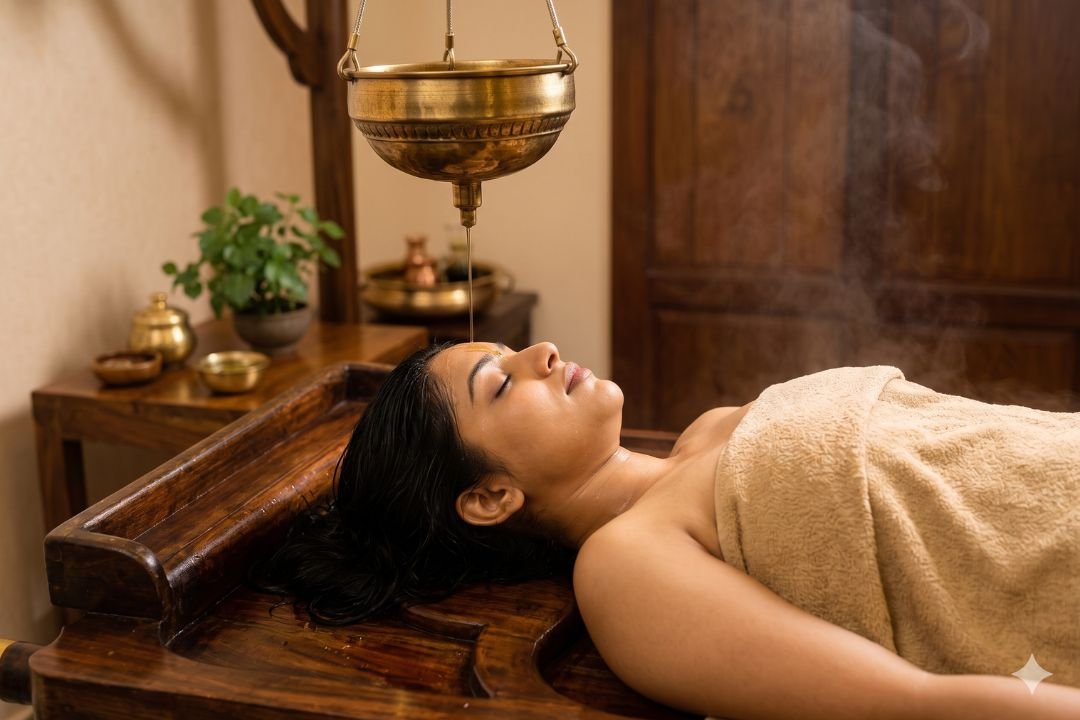
Shirodhara is an Ayurvedic procedure in which a continuous, gentle stream of liquid, commonly oil, milk or an herbal preparation, is poured over the forehead and scalp. In children, it is sometimes used by Ayurvedic practitioners as a supportive therapy, particularly for relaxation. In Kaumarbhritya (Ayurvedic paediatrics), Shirodhara is traditionally used mainly for conditions involving Vata imbalance, stress, sleep disturbance and certain neurological and psychological complaints.
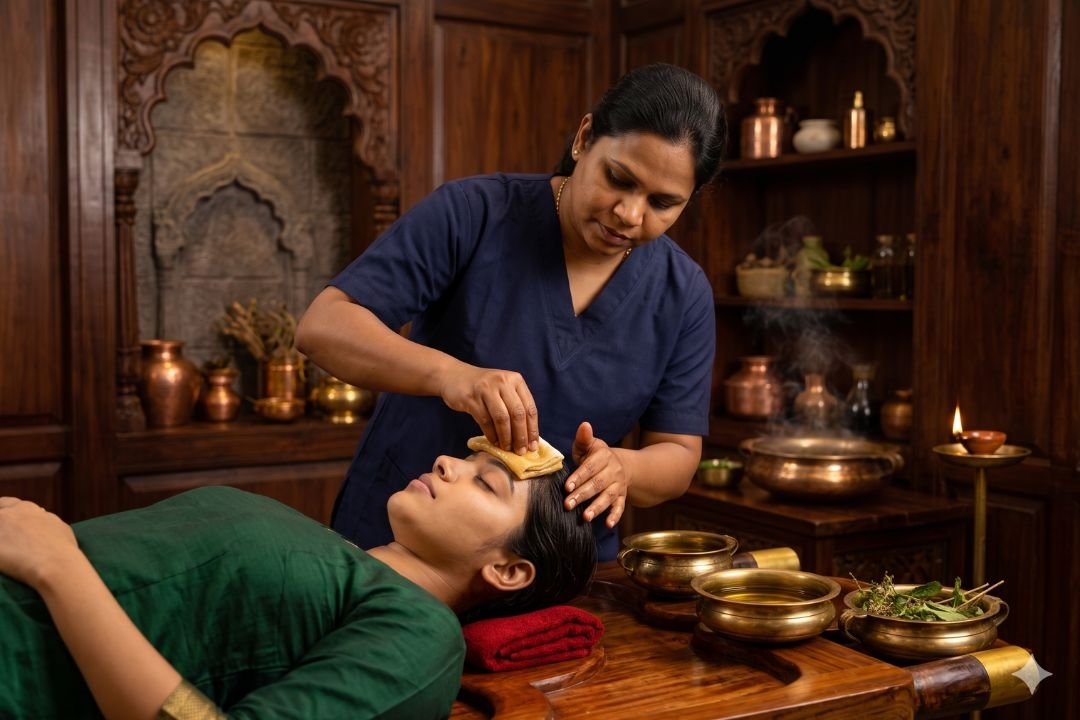
Shiropichu is a Murdha Taila procedure in which a piece of cotton or cloth soaked with medicated oil is kept over the head (Shira) for a specified period.
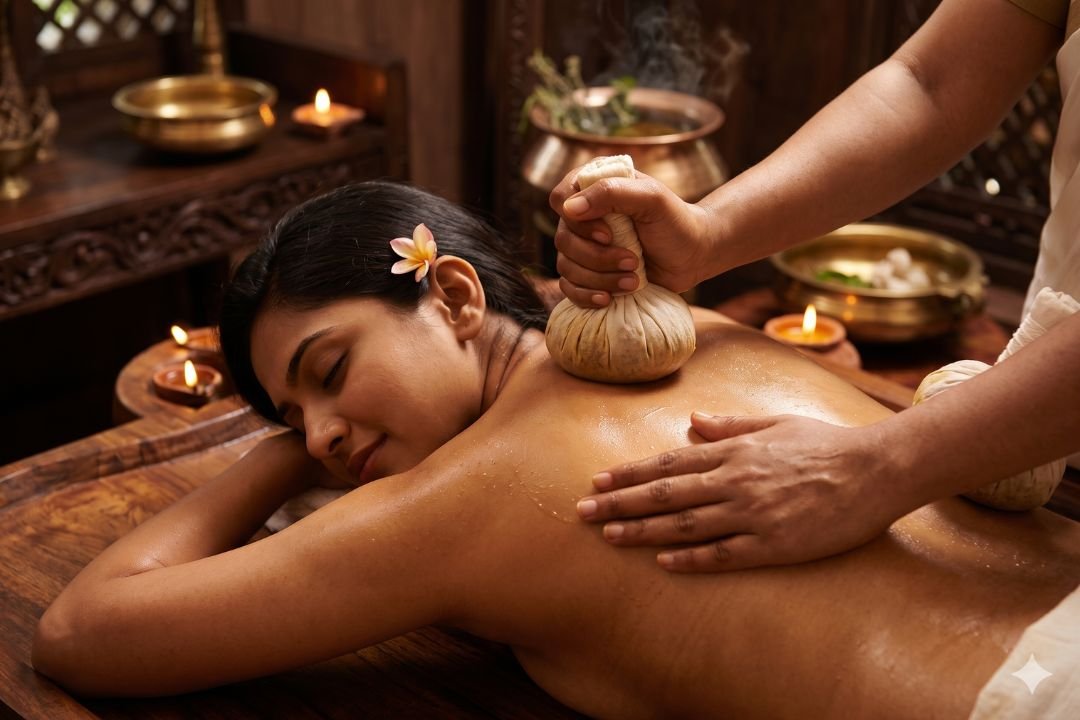
Shashtika Shali Pinda Sweda (Navara Pinda Sweda) is an Ayurvedic Pinda Sweda (bolus fomentation) therapy using cooked Shashtika Shali rice, traditionally prepared with milk and a decoction, and applied as warm boluses.
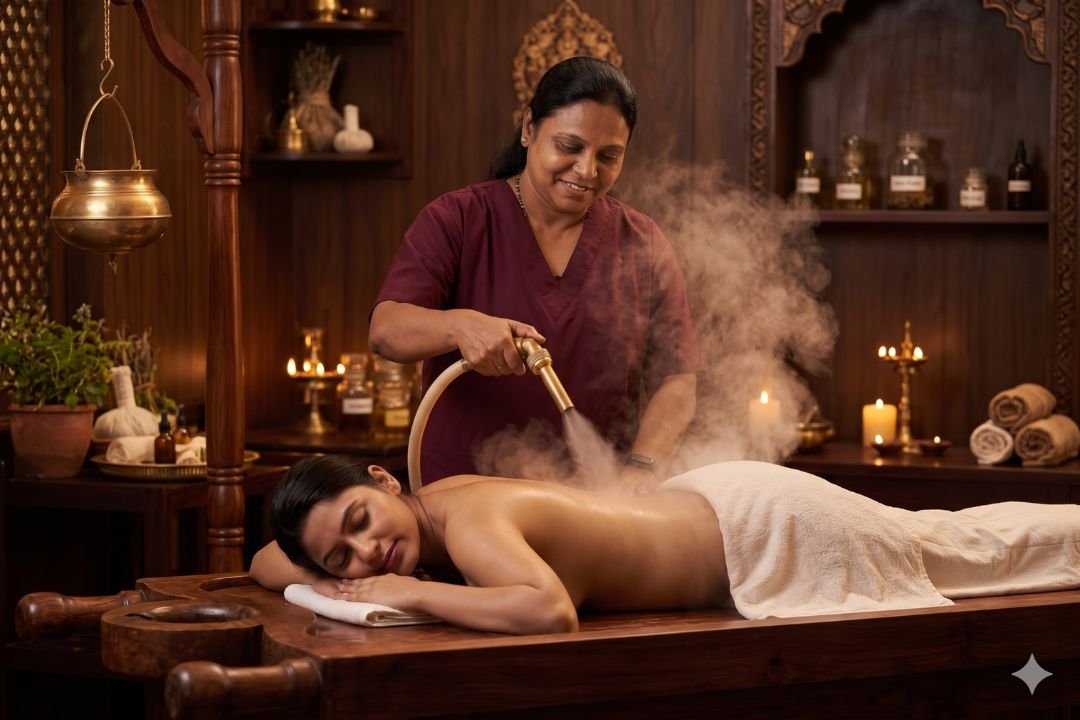
Nadi Sweda is a type of Swedana (sudation therapy) in which steam is delivered through a tube to a selected part of the body. In paediatric Ayurveda, it is generally used as a localised and carefully modified form of Swedana.
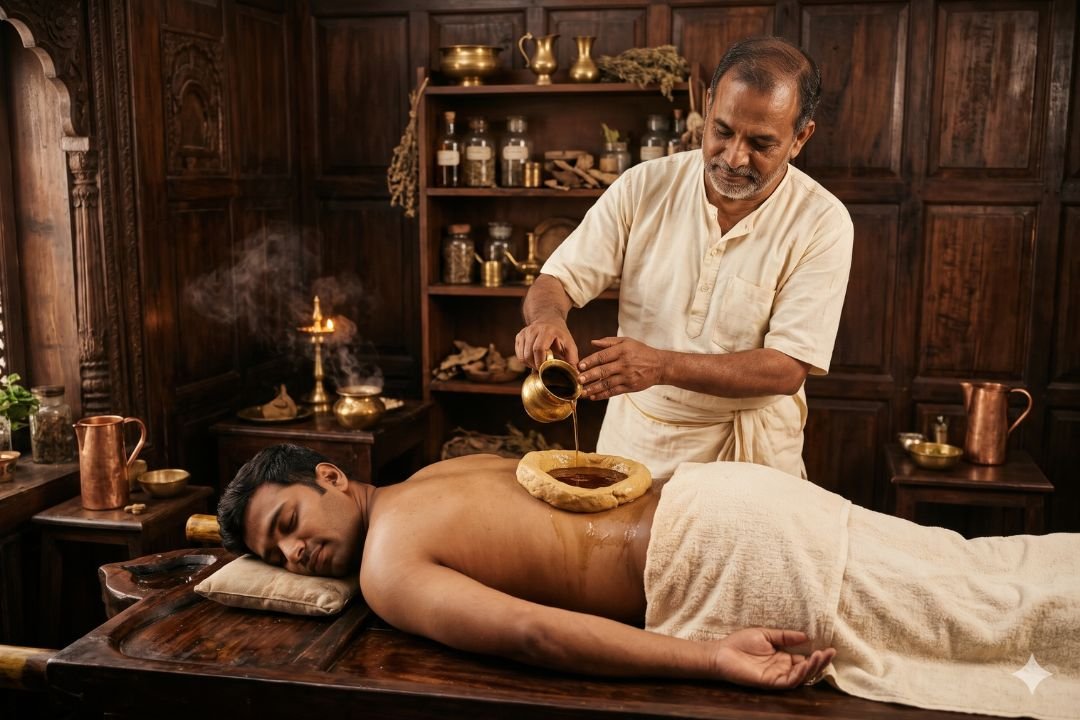
Matra Basti is a type of Sneha Basti in which a relatively small quantity of medicated oil or ghee is administered rectally. In Ayurvedic literature, Basti is particularly associated with the management of Vata-dominant disorders.
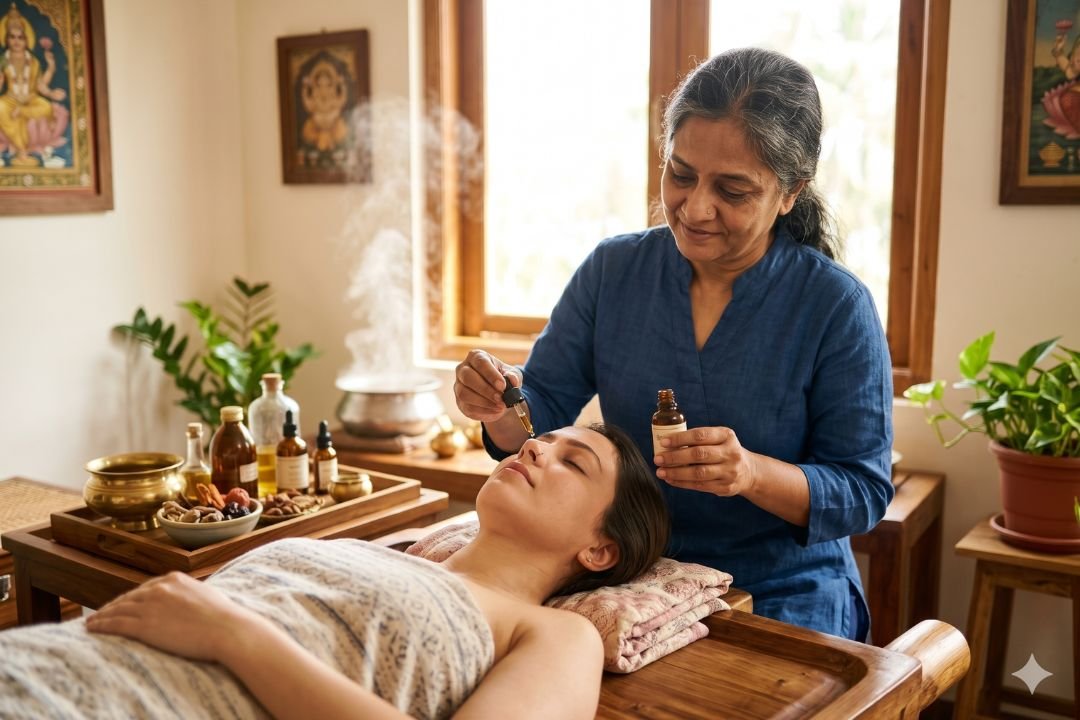
Nasya is the administration of an Ayurvedic medicine, usually oil or a medicated preparation, through the nasal route. In Kaumarbhritya, it is used selectively and with age-appropriate modifications.
Gentle medicated oil massage. Often considered for strength, growth, sleep and skin.
Continuous stream of oil, milk or herbal liquid over the forehead. Often considered for relaxation, sleep and stress.
Ol-soaked cotton kept on the head. Often considered for restlessness, headache and sleep.
Warm boluses of cooked rice with milk and decoction. Often considered for muscle weakness and stiffness.
Localised steam through a tube. Often considered for stiffness, body ache, cold and cough.
A small quantity of medicated oil or ghee, given rectally. Often considered for underweight, constipation and bedwetting.
Medicine given through the nose. Often considered for nasal congestion and headache.
An Ayurvedic physician considers your child’s condition and age before choosing any therapy.
Therapies are used selectively and adapted for children. Some, such as Shirodhara in seizure disorders, are used only as an adjunct under specialist supervision.
Many of these procedures are supportive, helping with comfort, calm, strength and rehabilitation.
These therapies support, and do not replace, medical assessment. If your child has difficulty breathing, a seizure or any urgent symptom, please call our 24×7 emergency team straight away.